
If you’re searching for a self storage business for sale, you’re probably at a crossroads. You’ve decided self storage is the right sector and want the quickest way in, or you’re still comparing routes. Either way, the first big decision isn’t which site. It’s whether to buy or build.

The short answer is buying gets you trading income sooner and a track record you can assess. Developing gives you control over location, design and cost base, but you carry more risk and wait longer for revenue. The right route depends on your capital, your appetite for risk, your experience, and what’s actually available in your target market.

Route 1: Buying an existing facility

The advantages

  • Income from day one: You inherit customers, contracts and a trading history.
  • Something to assess: Occupancy, rates and customer behaviour are real data.
  • Speed: You skip planning, construction and the lease-up period.

The trade-offs

  • You pay for the income: The price reflects how the facility trades, so any upside the seller has already achieved is priced in.
  • You inherit the design: If the unit mix, layout, access or security are wrong for the local market, changing them costs money and disrupts existing customers.
  • Limited choice: Many well-run facilities change hands through brokers or off-market conversations rather than public listings, so the right one may not be available when you’re ready.

Route 2: Developing a new build or conversion

The advantages

  • Designed around demand: You choose the location, the unit mix, the access and the technology from the start.
  • Modern specification: A new or freshly fitted facility should need less remedial spend in its early years.
  • Value creation: There’s potential to create value between the cost of delivering the facility and what it’s worth once stabilised.

The trade-offs

  • Planning and construction risk: Consents, costs and programme can all move.
  • The lease-up gap: Units fill over time rather than on opening day, so you need to fund the period before income catches up with costs.
  • More expertise required: You’ll need the right team and partners around you, from site selection through to fit-out.

Buy or develop, side by side

  Buying Developing
Time to income Immediate After build and lease-up
Upfront capital Purchase price, priced on trading Land/building, build costs, funding for lease-up
Main risk Overpaying, inherited problems Planning, cost, programme and letting risk
Control over design Limited Full
Certainty of performance Higher (trading history) Lower (projections)
Expertise needed Due diligence and operations Site selection, design, construction and operations

A third route: repurpose a building you already own

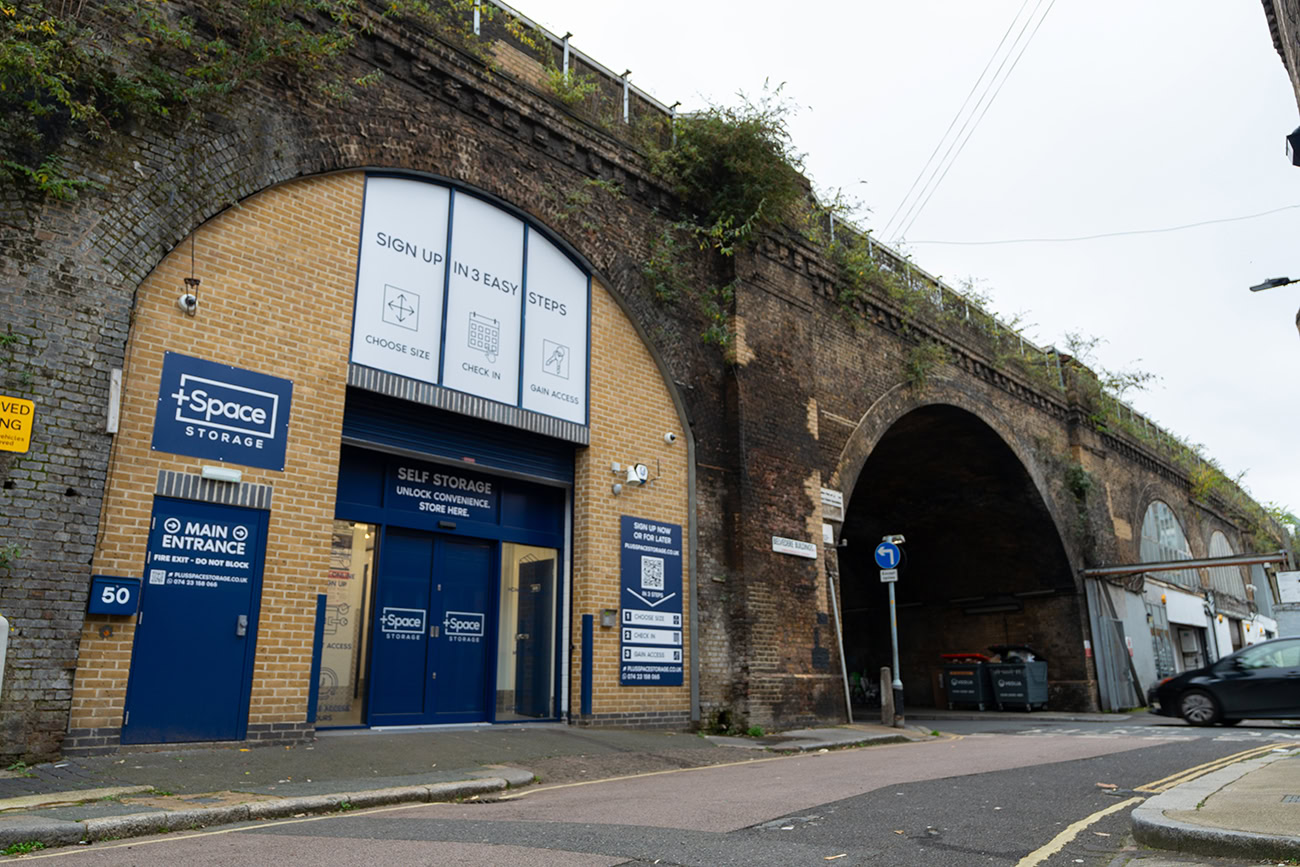
If you’re weighing a building you already have in mind, our guide to building conversion suitability covers what makes a conversion work. Spaces we’ve turned into self storage facilities include a cattle shed, a former farm, an old potato processing plant, a chicken shed and a railway arch.

  • Vault Storage, Blackpool. Two property investors bought a unit in the old TVR factory for a different purpose that didn’t come to fruition. The building was just 650 sq ft, but a full mezzanine doubled the usable area to 1,300 sq ft. The owners say their return on capital employed is far greater than it would have been on a small house or apartment.
  • Arden Self Storage, Solihull. A farmer converted a former cattle shed in 2007 when farming was no longer profitable, then extended the space as customer demand grew. It’s now 100% let and, in the owner’s words, delivers a far higher return than farming.
  • MoorSpace Storage Company, Huddersfield. When a tenant vacated one of his industrial buildings, the owner saw a chance to diversify his property portfolio. The restricted ceiling height made some suppliers doubt a viable layout, but a bespoke three-level design unlocked the space.

If you own a building, the question shifts from “buy or build?” to “what is this space worth as storage?

If you’re leaning towards buying…

Look beyond headline occupancy. Check physical versus economic occupancy, rate trends by unit size, length of stay, arrears, and how well the unit mix matches local demand. Inspect the roof, doors, security, fire safety and services, and confirm the planning position and tenure. Consider whether the site has room to expand or reconfigure.

If you’re leaning towards developing

Test the catchment and competitor supply before you commit to a site. Get realistic build costs and programme early, plan the unit mix around demand rather than the floor plan, and work out how you’ll fund the lease-up period. The decisions made at the design stage are the hardest and most expensive to change later.

Whether you’re assessing an existing facility or planning a new one, the earlier you involve specialists, the fewer costly surprises you’ll face. Kuboid works with operators on self storage fit-out, design and technology, and can help you understand what a site could become, whatever route you take. Get in touch with the Kuboid team.


Stay up to date

Get the most important industry developments, trends, and news, straight to your inbox


    Related
    Have a project in mind?

    Whether you’re a multi-site operator or new to the industry, no project is too big or small. At Kuboid our team of experts understands exactly what is required to deliver a successful self storage facility, offering a tailored, comprehensive range of services and solutions for each customer. We ensure every facility is delivered to the highest standard. Contact us today to find out more.

    Contact us

    Newsletter


      Enquiries
      Head Office

      Kettering Parkway,
      2 Swallow Court,
      Northamptonshire, NN15 6XX

      Kuboid SSA UK - Self Storage Association UK
      Kuboid Carbon Neutral Business 2023

      © 2026 Kuboid – Redefining Self Storage. All rights reserved. Terms | Policies | Admin